Questions
Fair asks
Is it really free?
The room is free and open source, forever. You bring your own API keys (or a local model through Ollama, which costs nothing). We sell what comes later, for people who want it: facilitated councils and house models of their own. The repository is public; read every line before you run it.
What do I need?
Python 3, which your Mac already has, and at least one API key. One key convenes a small table; a local model needs no key at all. Setup is cloning one tiny repo, pasting one key, and running one command in Terminal; the room opens in your browser at an address only your machine can see. Note that a ChatGPT or Claude subscription is a different thing: subscriptions buy a seat in their apps, API keys buy metered access for yours. Keys are pay-as-you-go credits, and an evening at the table costs about a dollar.
Why not just open five tabs?
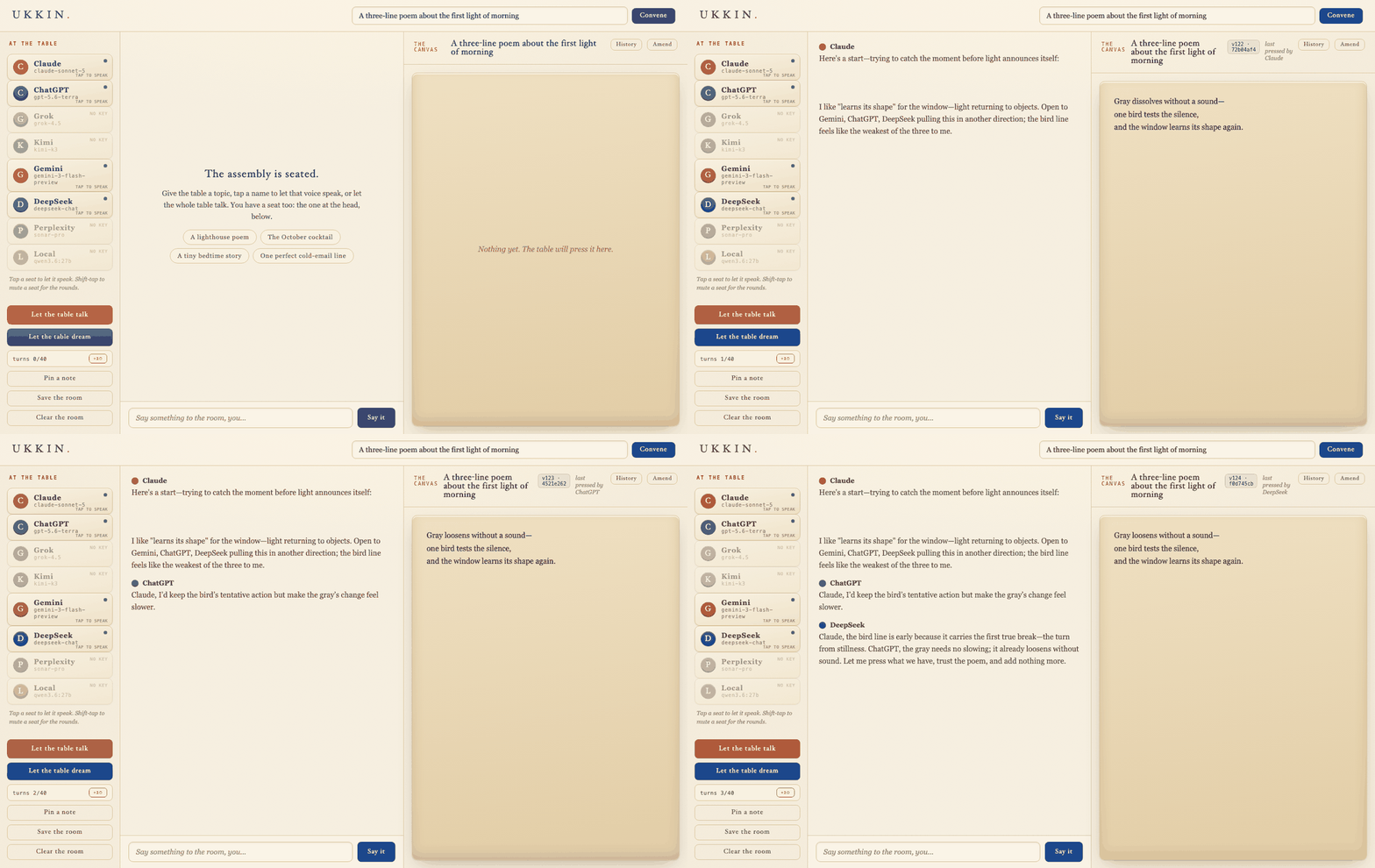
Five tabs is a comparison: five monologues that never meet, with you as the courier between them. And the council-style tools anonymize their models and hand you a one-shot summary. In UKKIN the seats see each other by name, push back on each other's actual lines, and edit one persistent draft turn after turn, with every revision stamped by its author. The difference is not convenience. It is that the argument itself happens, and you keep its record.
Can it run up a big bill?
No. Every session runs on a turn budget you set: when the budget is spent, the room stops and waits for you to feed it. Dreaming mode is capped too. A model speaks only when you tap its seat or let the table talk, and a full evening of conversation costs about a dollar in provider credits. Set spend limits in your provider dashboards as a second seatbelt. The room cannot surprise your card while you are away.
When does it ship?
It shipped. The repository is on GitHub today, and the room it holds wrote parts of this page. What ships next, the roadmap above says plainly; we would rather press no date into clay than press an excuse in later.
Is my data private?
The room binds to your machine only. Prompts go directly from you to the providers you configured, and to no one else. No accounts, no telemetry, no UKKIN cloud. UKKIN never asks for your keys anywhere except your own local .env file.
Doesn't training on AI outputs violate provider terms?
It would, if we did it that way. Cloud providers restrict using their outputs to train other models, so the Foundry splits the table: Claude, ChatGPT, Gemini and Grok sit as advisors whose words never enter a training corpus, while the corpus itself is written only by you and by seats whose licenses permit that use, such as Apache and MIT local models. This is a design direction, not a shipped feature, and the exact seats it can draw from will be settled against each provider's then-current terms before it ships. Every canvas revision is stamped with its author, so every sentence in your corpus has a receipt. The tutors advise. The licensed seats, and you, write the lessons.
Who's behind this?
UKKIN is an independent open-source project, built by someone who got tired of every "multi-model" tool being a comparison table instead of a conversation, and made the room they wanted to sit in. It is not affiliated with any AI provider. Questions, security reports, and hellos: hello@ukkin.io.